
Open cracks let water into the base. Freeze-thaw, heat and traffic do the rest, and a crack becomes a pothole.
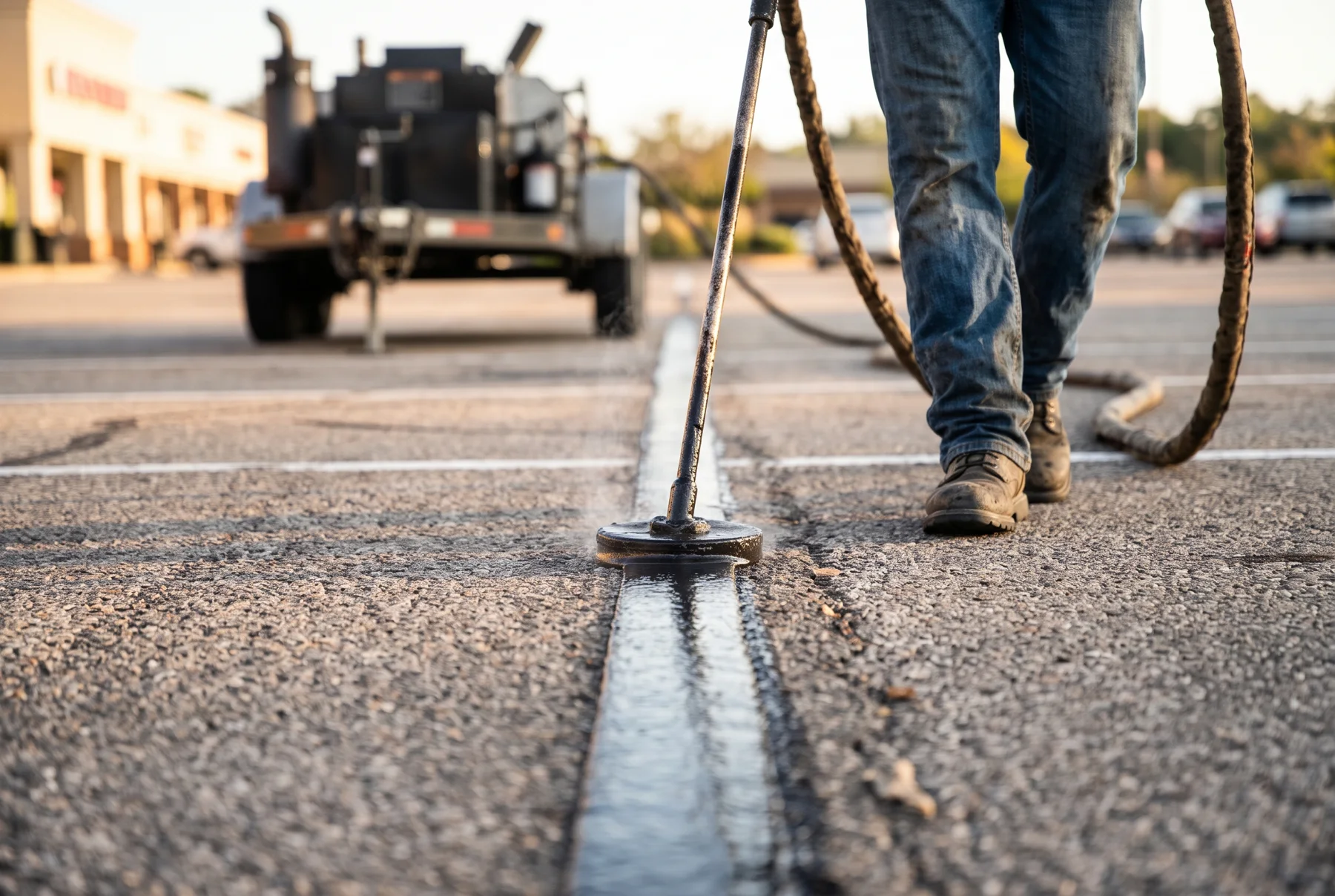
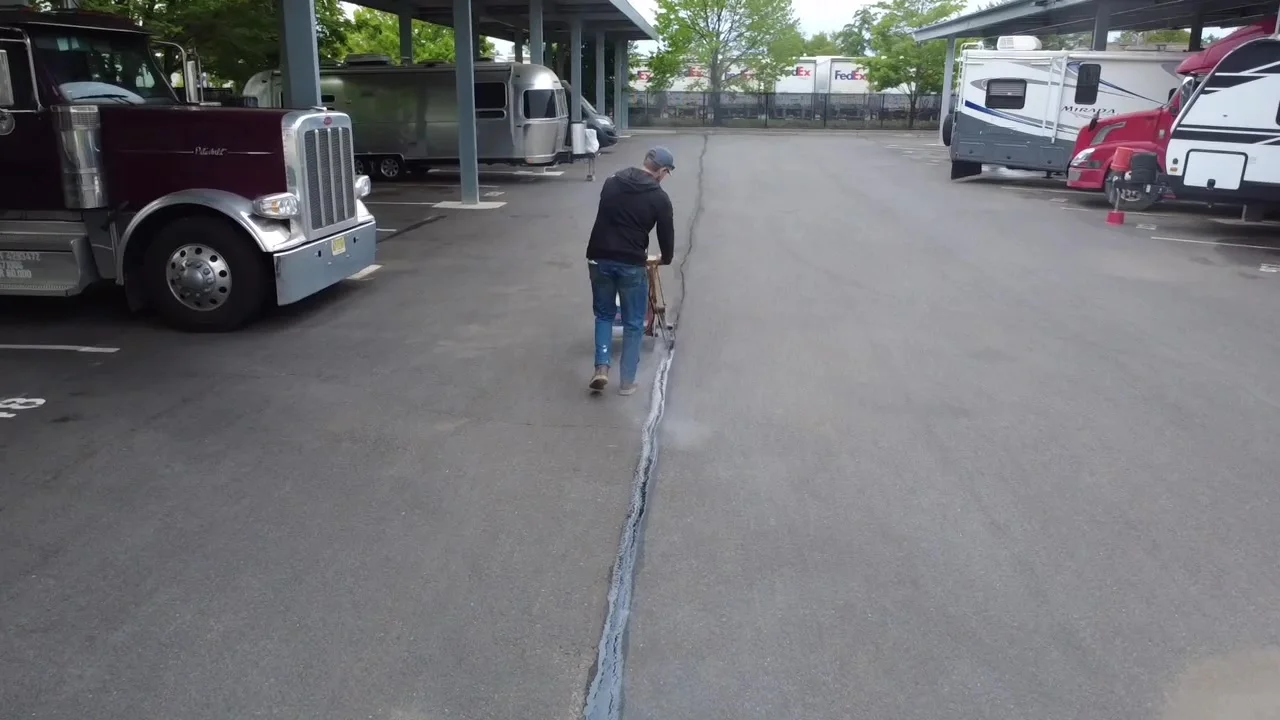
We clean and route cracks, then fill them with hot-pour rubberized sealant that stays flexible through the seasons.
What's included
Hot-pour crack sealing
Why cracks matter
Every parking lot cracks over time. The problem isn't the crack itself, it's the water that goes in. Water softens the stone base under the asphalt, and freeze-thaw cycles and traffic widen the gap. Left alone, a simple crack becomes broken pavement and then a pothole.
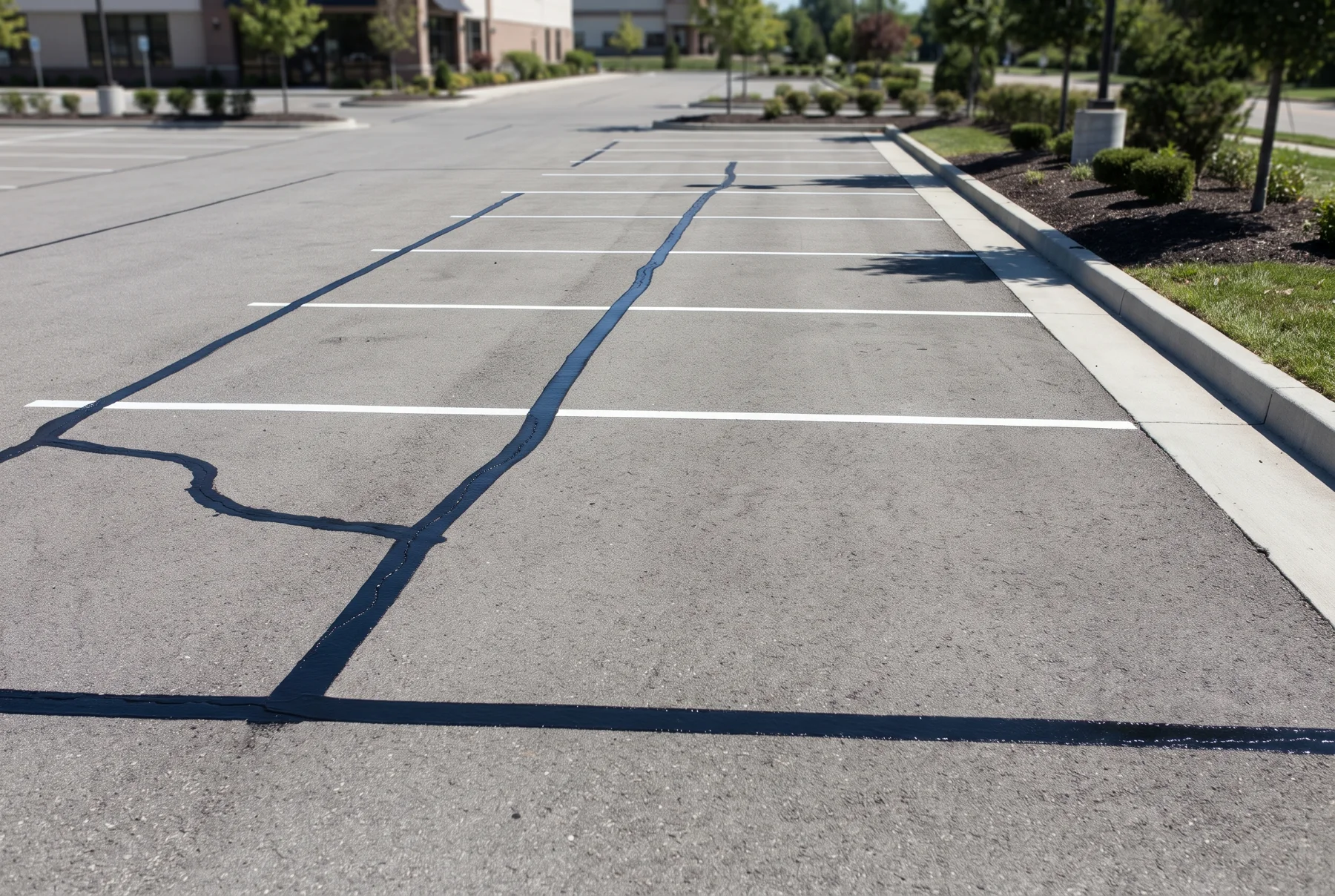
Crack sealing keeps the water out. It's one of the least expensive things you can do for a parking lot, and it protects every other dollar you've spent on the pavement.
Crack filling vs. crack sealing
The terms are often used interchangeably, but there's a difference. Crack filling places material into cracks that don't move much. Crack sealing uses a hot-pour rubberized sealant designed to stretch and flex as the pavement expands and contracts with the seasons.
Appell uses hot-pour rubberized sealant for commercial lots because it stays flexible and bonded far longer than cold-pour fillers from a hardware store.
Which cracks can be sealed?
Sealing works best on individual cracks from about a quarter inch to an inch wide. Very wide cracks may need to be filled in stages or patched. Alligator cracking, a web of connected cracks that looks like reptile skin, means the base underneath has failed. That area needs asphalt repair, not crack sealant.
When to seal cracks
Cool, dry weather in spring and fall is ideal, because cracks open wider when it's cool and take in more sealant. Crack sealing should always be done before sealcoating, so the coating goes down over a sealed, watertight surface. Many property managers seal cracks every year as part of an annual maintenance program.
How Appell seals cracks
- Clean. Blow out dirt, debris and vegetation so the sealant bonds to clean, dry asphalt.
- Route if needed. Cut a clean reservoir into the crack so it holds more sealant and lasts longer.
- Fill. Heat rubberized sealant and apply it into the crack.
- Finish. Squeegee a neat band over the crack so the seal blends in and sheds water.
- Reopen. Traffic can usually return within the hour.
Why property managers choose Appell
- Fast, accurate quotes. Measured from current aerial imagery, in writing, before any work starts.
- Off-hours scheduling. Nights, early mornings and weekends, so customers and tenants aren't disrupted.
- Photo documentation. Before-and-after photos for every job, so you can see the work without driving to the site.
- One point of contact. A real person who answers, from the quote to the final invoice.
- Portal ready. Work orders accepted and closed out in ServiceChannel, CorrigoPro, Fexa, fmPilot2 and more.
Local crews, national coverage
Local Appell owners handle this work in their own markets, including Denver, Northern Colorado, Nashville, Georgia, Charlotte, Fort Lauderdale, North Jersey and Long Island. Find your local Appell.
Managing many properties? Appell National Accounts runs programs across entire portfolios with one point of contact, one invoice, and before-and-after photos for every site, through ServiceChannel, CorrigoPro, Fexa and the other facilities portals you already use.
How we work
- Request. Submit through your portal, the form or a call.
- Quote. Measured from current aerial imagery for a fast, accurate written estimate.
- Schedule. Nights, early mornings or weekends so customers never notice.
- Complete & document. Before and after photos, closeout and one invoice.
Crack Filling & Sealing FAQs
How much does crack sealing cost?
Crack sealing is usually priced by the linear foot, so the cost depends on how many feet of cracks the lot has and how wide they are. We give you a free written quote, usually within a day or two.
How long does crack sealant last?
Hot-pour rubberized sealant typically lasts several years, depending on traffic and weather. An annual walk-through catches new cracks before they grow.
How soon can cars drive over sealed cracks?
Hot-pour sealant cools quickly, so traffic can usually return within an hour.
Should cracks be sealed before sealcoating?
Yes. Sealcoat alone won't keep water out of open cracks, so we always seal cracks first.
Can every crack be sealed?
Individual cracks up to about an inch wide are good candidates. Alligator cracking means the base has failed, and that area needs to be repaired instead.
What's the best time of year for crack sealing?
Cool, dry days in spring and fall, when cracks are open wider. It can be done any time the pavement is dry and above freezing.
One partner for every lot you manage.
Local Appell owners in 24 markets, a vetted network in all 50 states, and one team accountable for the work.