
Asphalt Crack Sealing & Crack Filling in Northern Colorado
Every crack is a doorway for water. Through Colorado freeze-thaw cycles that water expands in the base and turns small cracks into potholes. Sealing cracks early is the cheapest way to stop it.
Get a Crack Sealing & Filling Estimate
Tell us about your lot. We'll follow up within one business day.
Colorado pavement swings between strong summer sun and freezing winter nights, and every cycle opens cracks a little wider. Water seeps into open cracks, softens the base and the asphalt breaks apart under traffic.
We clean and route cracks, then fill them with hot-pour rubberized sealant that stays flexible in the heat. It's a small line item that protects the whole lot, and it's the right first step before sealcoating.
What's included
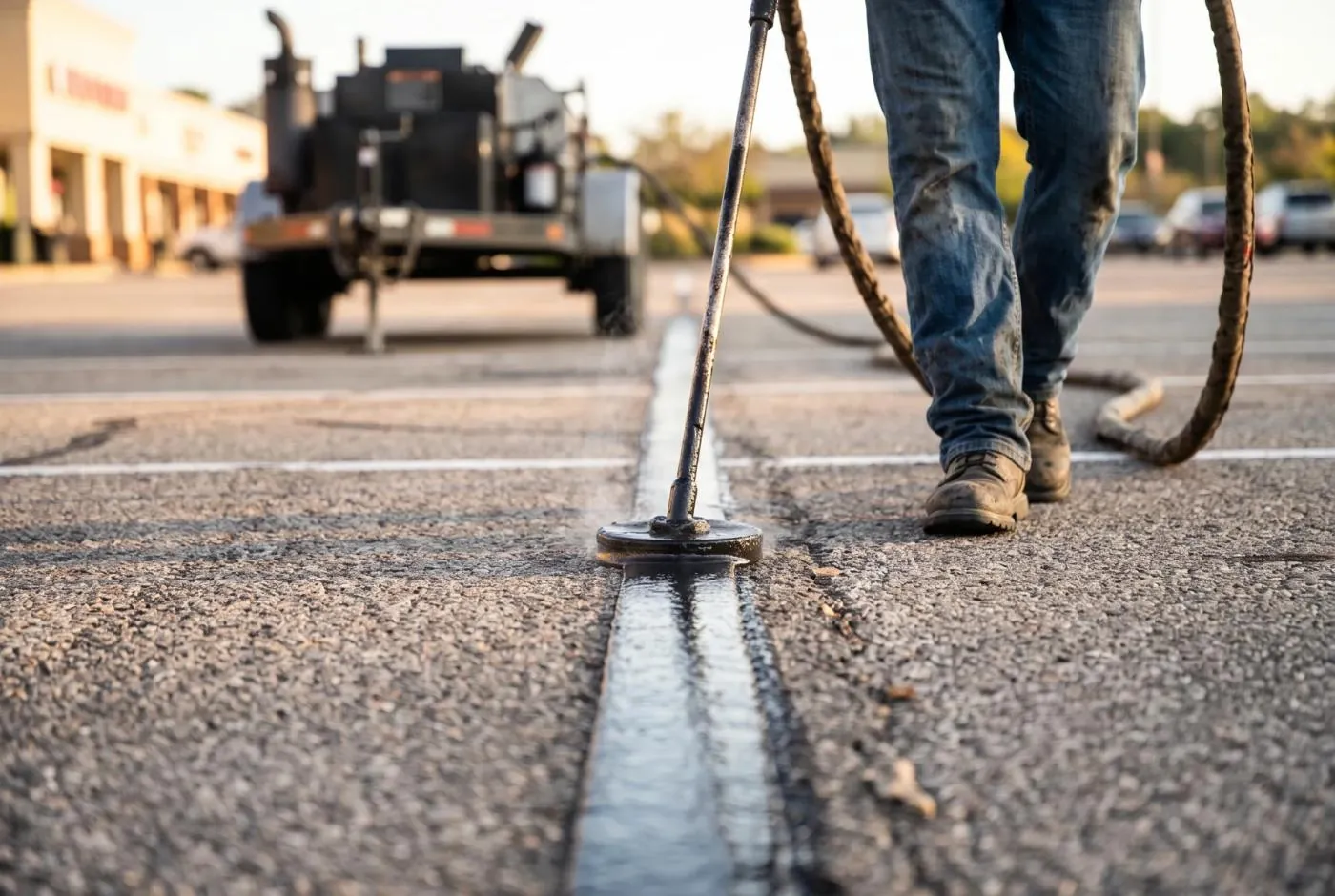
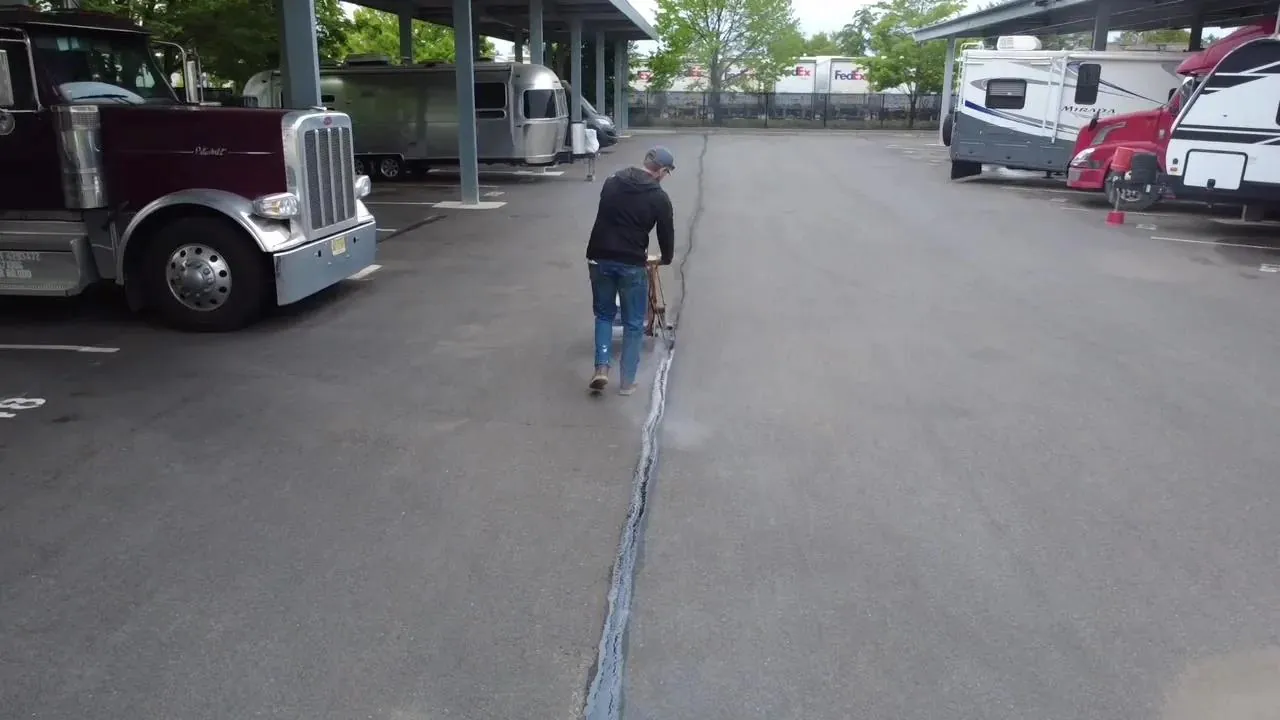
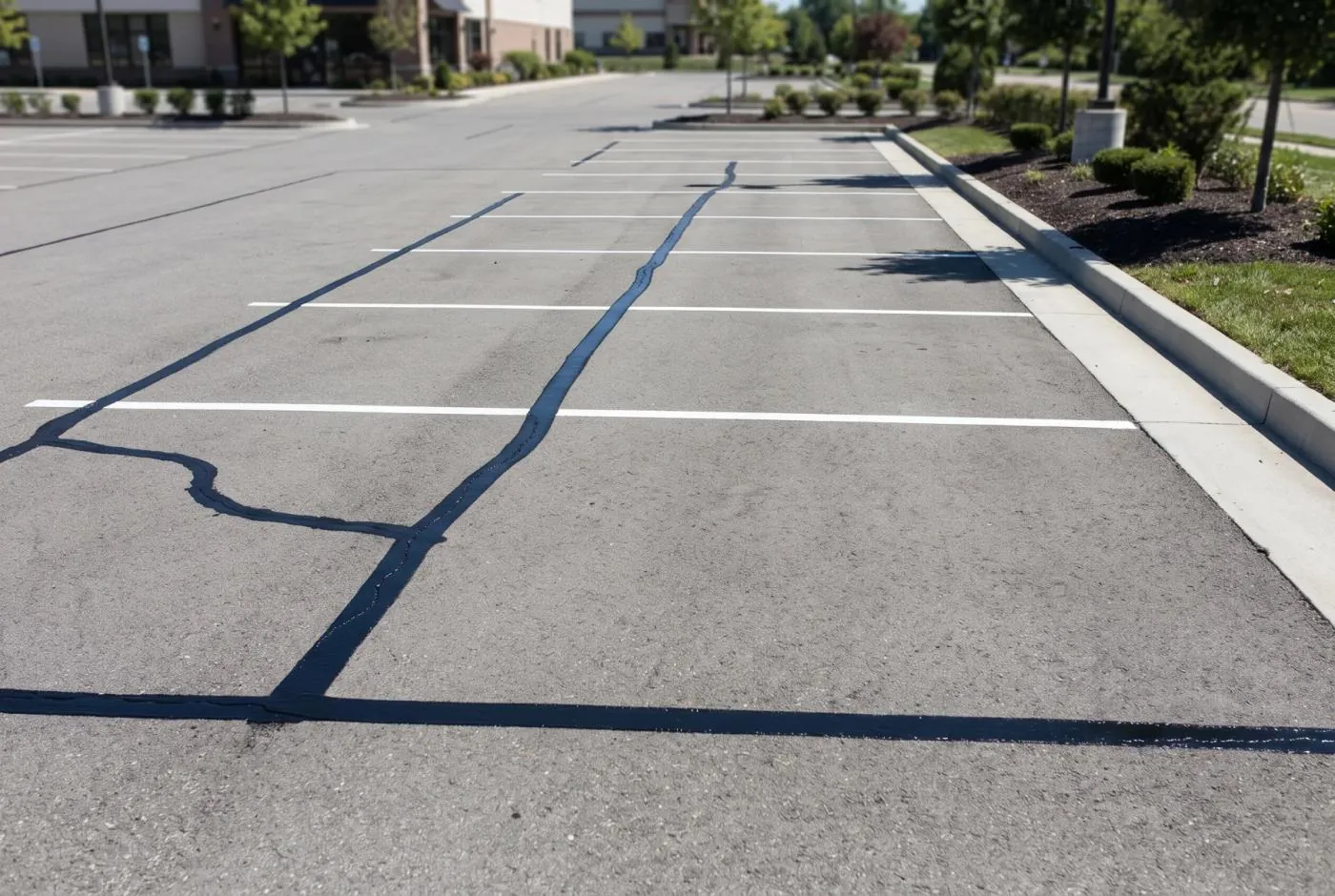
Crack sealing and crack filling explained
Crack sealing and crack filling both mean closing the cracks in asphalt so water cannot get underneath. We use hot-pour rubberized sealant, which is heated, poured into the cleaned crack and stays flexible, so it moves with the pavement as temperatures change instead of pulling away. It is one of the lowest-cost pavement maintenance jobs and one of the most effective, because it deals with water before it reaches the base.
Which cracks can be sealed
Single cracks that run along or across the pavement, cracks along the joints between paving passes, and the joint where asphalt meets a concrete curb, gutter or pad are all good candidates for asphalt crack repair. Areas where the surface has broken into a tight web of cracks are different: that is a base problem and needs to be cut out and patched. We mark which is which when we walk the lot.
Signs it is time to seal cracks
Cracks wide enough to catch a coin. Weeds or grass growing through. Cracks that are longer or wider than they were last year. Small potholes starting to form along a crack. Or you are planning to sealcoat, in which case the cracks are sealed first so the finish lasts.
When to schedule crack sealing
The pavement needs to be dry. In the Northern Colorado we seal cracks year-round. Most lots are done in a single visit, and sealed areas can usually be driven on soon after the sealant cools.
Part of a pavement maintenance plan
A simple cycle keeps a commercial lot in good condition: seal cracks as they appear, repair failed areas, sealcoat every few years and restripe when lines fade. We can set that up as an annual walk-through so nothing gets missed.
Why cracks form in asphalt
Asphalt cracks as it ages. Sun dries out the binder that holds it together, the pavement expands and contracts as temperatures change, and traffic flexes it thousands of times a day. Joints between paving passes and the edges where asphalt meets concrete are natural weak points. In Northern Colorado, freeze-thaw cycles, snowplows and strong sun are hard on pavement and paint alike. Cracking is normal; what matters is closing the cracks before water gets underneath.
How cracks are cleaned and sealed
Sealant only works in a clean, dry crack. We remove dirt, sand and vegetation from each crack with compressed air or a wire wheel, and make sure it is dry. Hot-pour rubberized sealant is then heated to the correct temperature and placed into the crack, finished slightly over the edges so it bonds on both sides. The sealant stays flexible, so it moves with the pavement instead of cracking apart.
Routing cracks
On some pavement, cracks are widened and squared with a router before sealing. Routing creates a clean reservoir that holds more sealant and gives it better edges to grip, which helps the seal last on working cracks that open and close with the seasons. Whether routing is worthwhile depends on the pavement and the crack; we recommend it only where it adds real life to the repair.
Crack sealing versus sealcoating
The two are often confused. Crack sealing fills individual cracks with a thick, flexible sealant to keep water out. Sealcoating is a thin protective coating over the whole surface. Sealcoating alone will not close a crack; the crack shows through again. The right order is cracks first, then sealcoat, then striping.
When a crack needs more than sealing
Sealant is the right repair for single cracks in pavement that is otherwise sound. Where cracks form a tight interconnected pattern, where the pavement has sunk, or where pieces are breaking loose, the base underneath has failed and the area needs to be cut out and repaired. We mark those areas separately so you know exactly what each part of the lot needs.
How long crack sealing lasts
A properly cleaned and sealed crack lasts for years, though cracks that move a great deal may need touching up over time. An annual look at the lot, ideally before the wet season, lets new cracks be sealed while they are small.
How we work
- Walk the lot. We map cracking and flag anything that needs repair instead.
- Estimate. Simple, footage-based pricing.
- Seal. Clean, route and fill — usually in a single visit.
- Protect. Sealcoat and restripe on top when you're ready.
Why it matters in Northern Colorado
Freeze-thaw cycles in Northern Colorado put water and ice into every open crack. Sealing cracks keeps it out of the base and prevents potholes.
Where we provide crack sealing & filling
Crack Sealing & Filling in Fort Collins · Crack Sealing & Filling in Loveland · Crack Sealing & Filling in Greeley · Crack Sealing & Filling in Longmont · Crack Sealing & Filling in Boulder · Crack Sealing & Filling in Broomfield · Crack Sealing & Filling in Westminster · Crack Sealing & Filling in Brighton
Crack Sealing & Filling FAQs
When is the best time to seal cracks?
Late spring through fall works best in Northern Colorado, as long as the pavement is dry and temperatures are above freezing. Late summer or fall, before the first hard freeze, is ideal.
Is crack sealing the same as sealcoating?
No. Crack sealing fills individual cracks; sealcoating covers the whole surface. They work best together, cracks first.
How long before I can drive on it?
Usually within an hour or two once the sealant cools.
Will sealed cracks show?
Sealed cracks remain visible as dark lines, but they're protected — and sealcoating over them evens out the look.
What is the difference between crack sealing and crack filling?
The terms are used interchangeably. Both mean cleaning a crack and closing it with sealant so water cannot get into the pavement base.
Do you seal cracks before sealcoating?
Yes. Cracks are cleaned and sealed first, then the sealcoat goes over the top.
Can every crack be sealed?
No. Tight webs of cracking mean the base has failed, and those areas need an asphalt repair instead.
Do you seal cracks in concrete?
Our crack sealing is for asphalt, including the joints where asphalt meets concrete curbs and pads.
How soon can traffic drive over sealed cracks?
Usually soon after the sealant cools. We will confirm when the area can reopen.
Will sealed cracks be visible?
Yes, sealed cracks show as dark lines until the lot is sealcoated, which gives a more uniform appearance.
How wide a crack can be sealed?
Most cracks can be sealed. Very wide cracks or areas with broken pavement may need a patch instead.
Is crack sealing worth doing without sealcoating?
Yes. Keeping water out of the base is valuable in its own right, with or without a sealcoat.
Ready for a sharper-looking lot?
Free, no-obligation estimates across Northern Colorado. Night and weekend scheduling available.