
Asphalt starts oxidizing the day it's laid. Sun turns it gray and brittle, water finds small cracks and oil softens the surface. Sealcoating puts a protective layer back on top so the pavement underneath lasts longer.
We clean the lot, fill cracks, treat oil spots and apply commercial-grade sealer, then restripe on fresh black so lines pop.
What's included
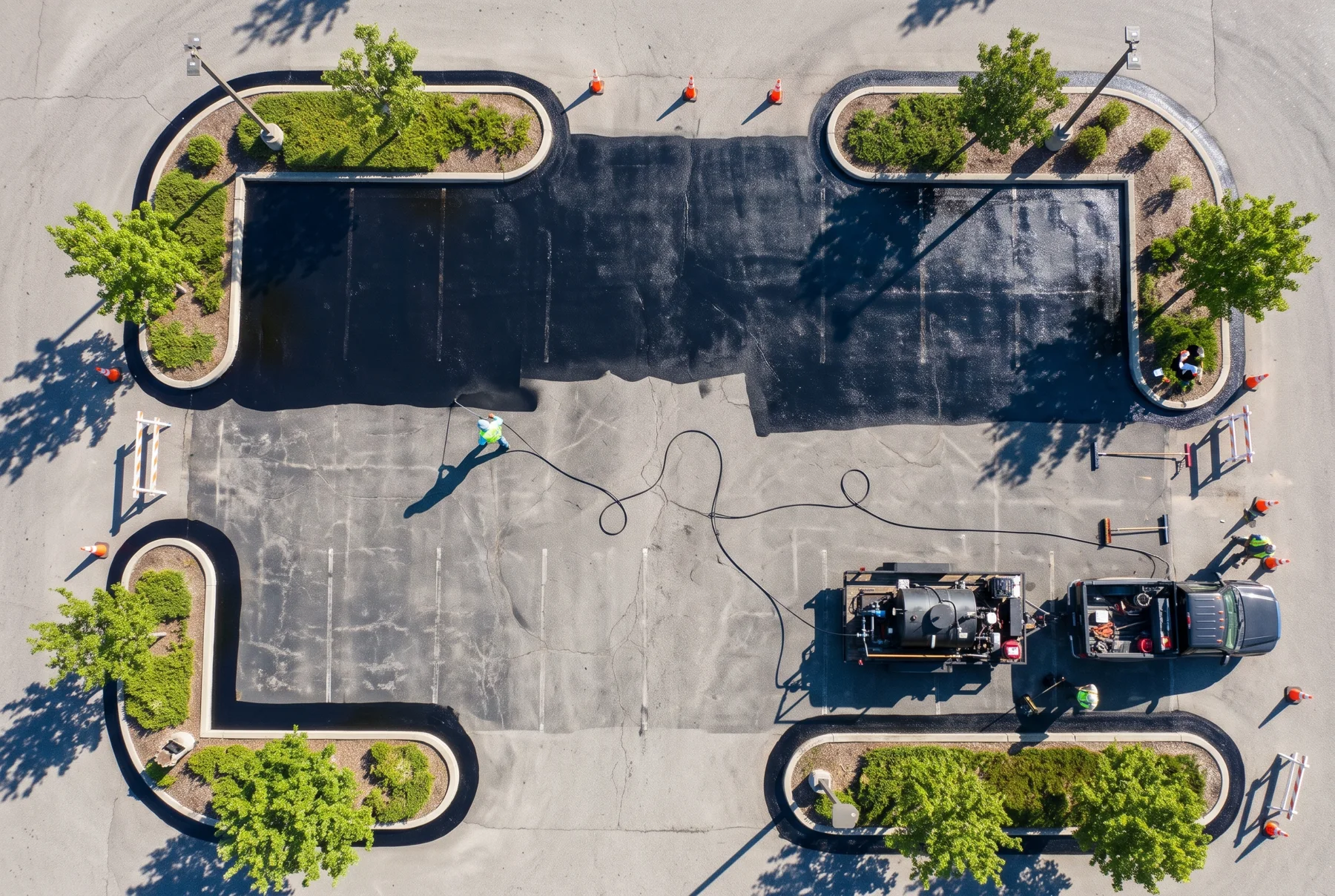
Before & after
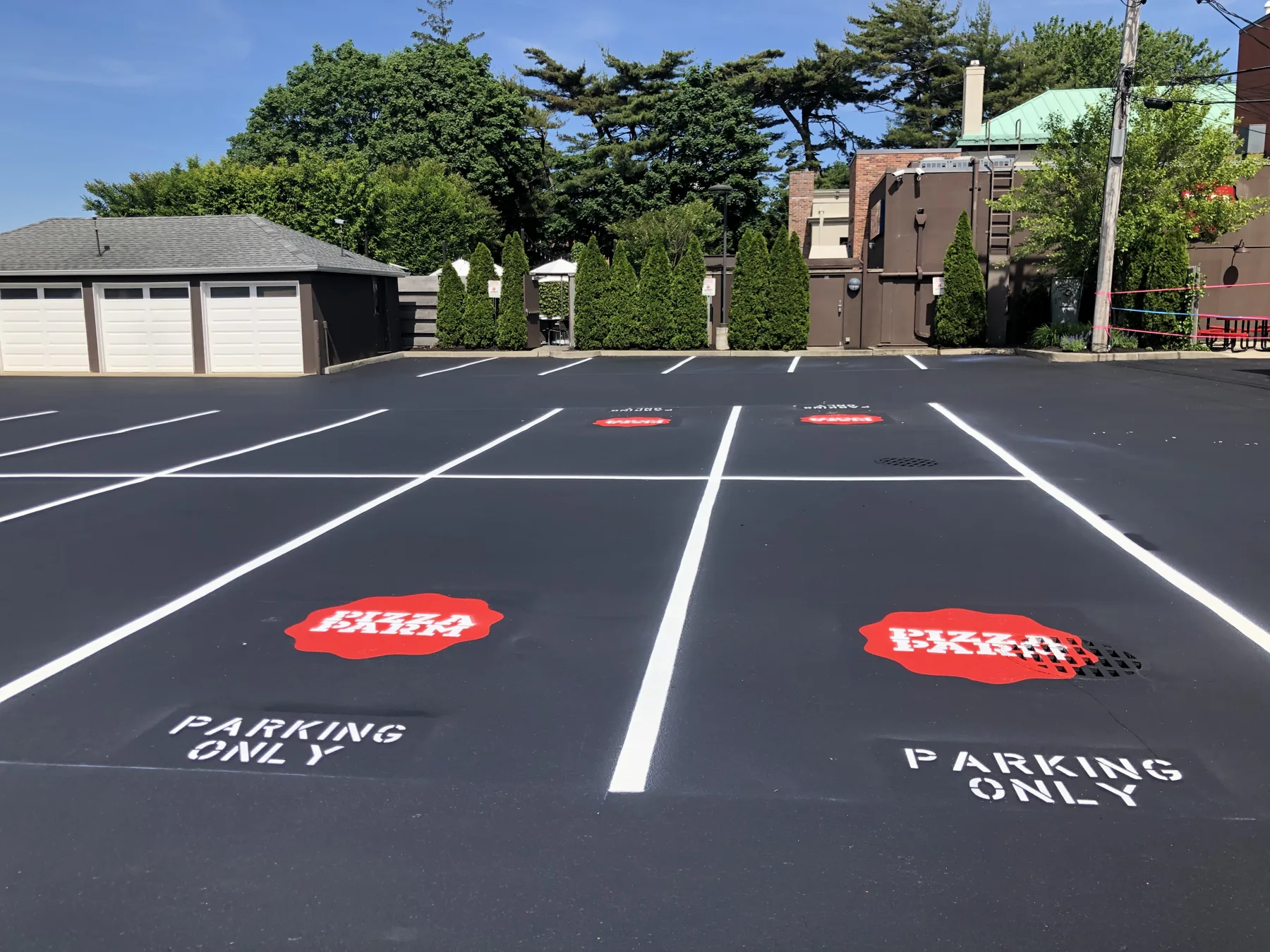
The same restaurant lot, before and after an Appell sealcoat and restripe.
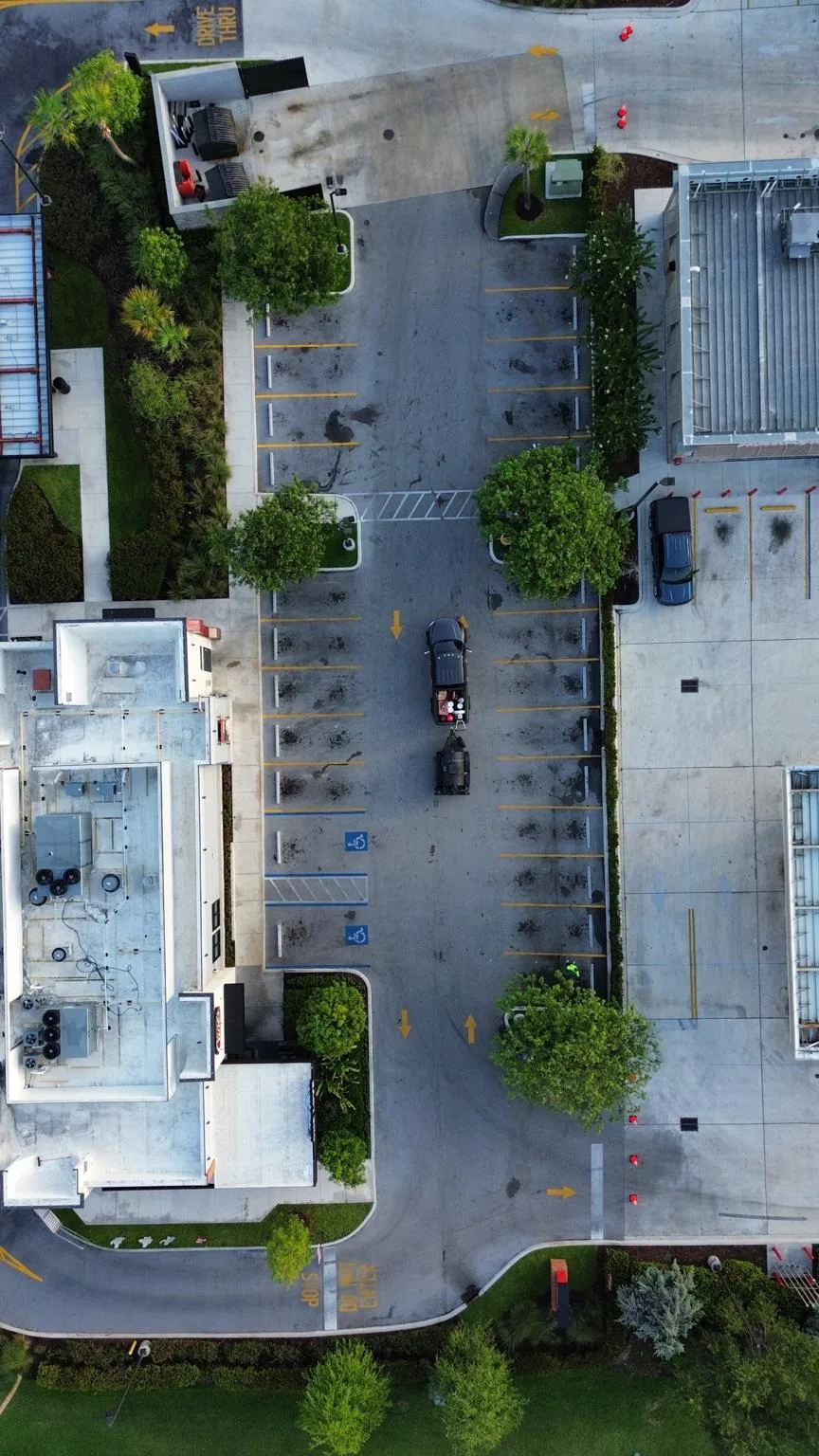 Before
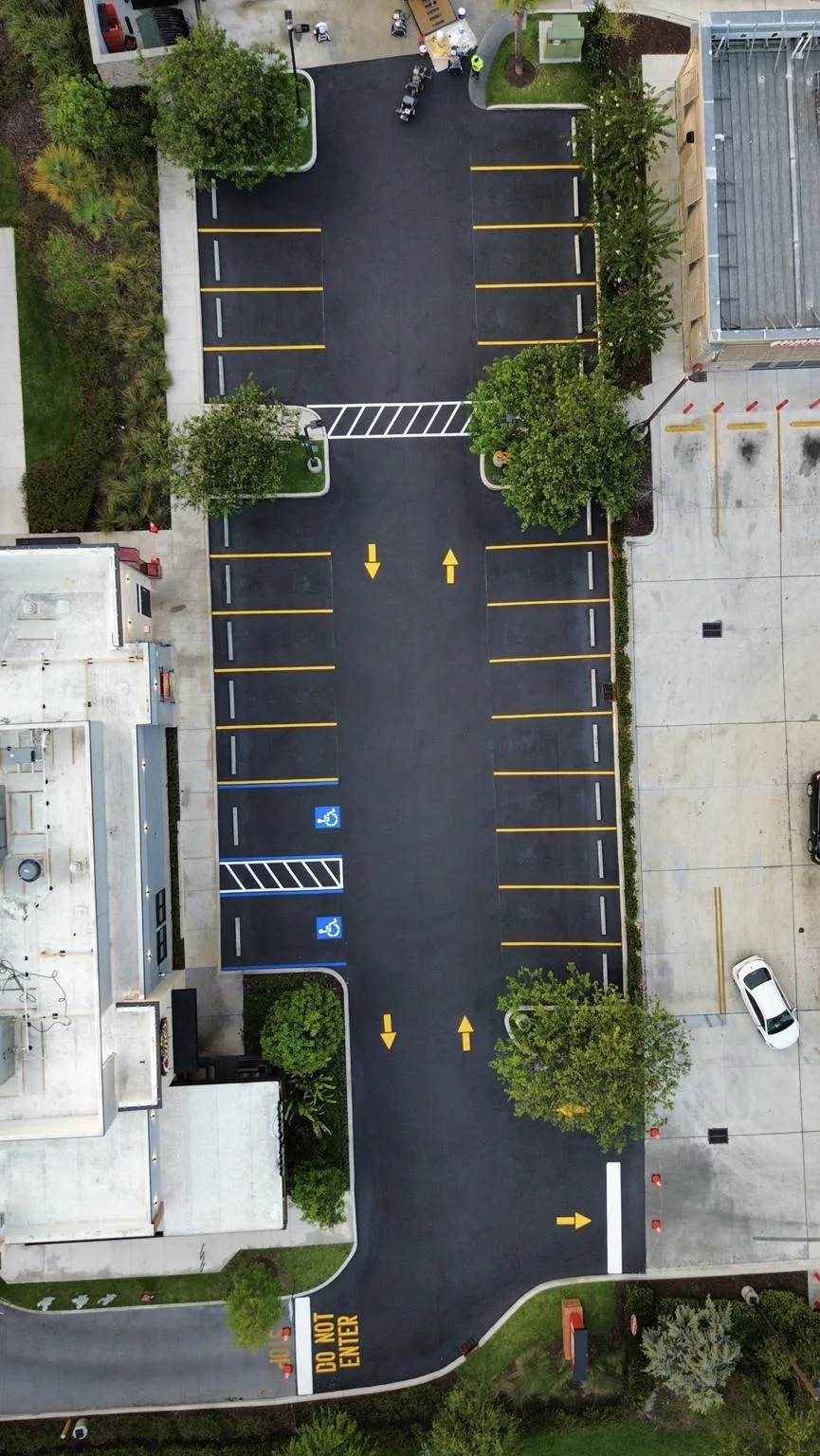 After Appell
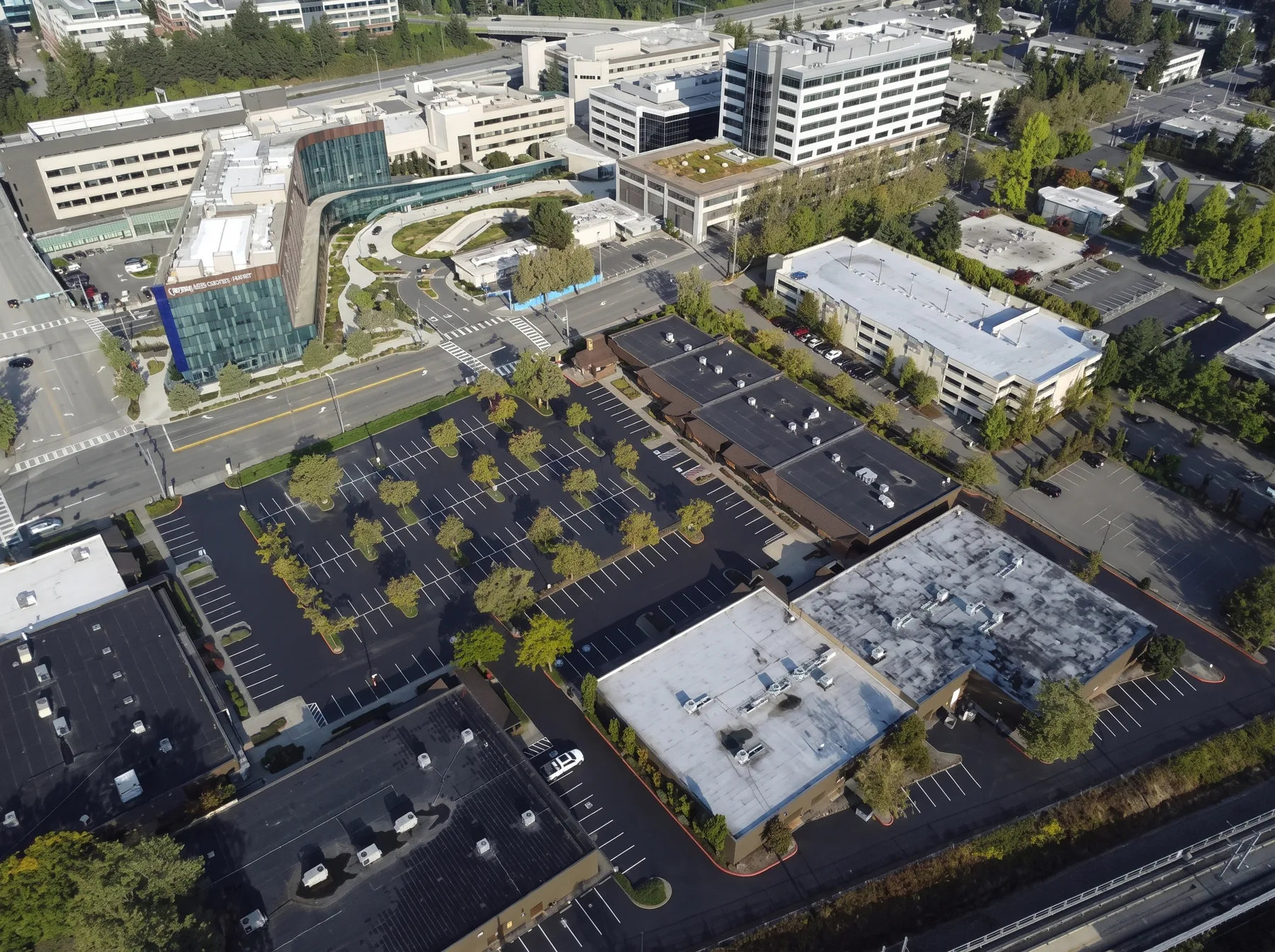
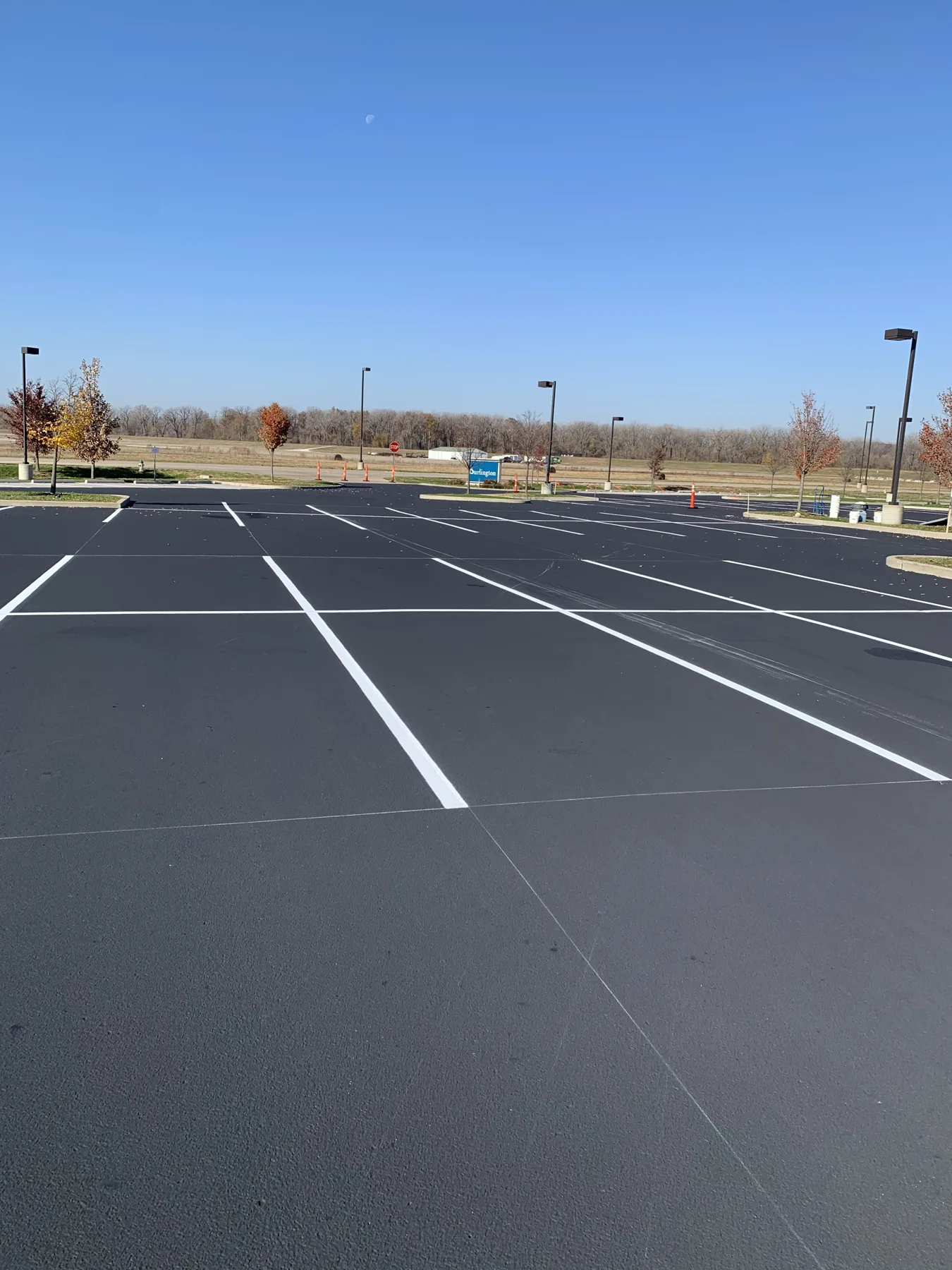
Recent sealcoating work
Why sealcoating pays for itself
New asphalt is black and flexible. Over time, sun, water, oil and traffic dry it out. It turns gray, the surface loosens and small cracks open. Sealcoating puts a fresh protective layer on top that slows all of that down.
The math is simple: sealcoating costs a small fraction of repaving. Sealing a lot on a regular schedule, with cracks filled first, is one of the most cost-effective ways to stretch the life of the pavement you already own. It also makes the whole property look newer the same day.
How often should a parking lot be sealcoated?
Most commercial parking lots should be sealcoated every 2 to 3 years. Busy lots, drive-thrus and lots in hot, sunny climates may need it sooner. Sealing too often can build up layers that crack, so we look at the surface before recommending a schedule.
New asphalt should cure before its first sealcoat, usually at least 6 to 12 months. A good sign it's time: the surface has faded from black to gray, you can see loose stone, or water no longer beads on it.
What sealcoating does and doesn't fix
Sealcoating protects pavement that is still in sound condition. It slows oxidation, keeps water and oil from soaking in, and evens out the color.
It does not fix potholes, crumbling areas, alligator cracking or drainage problems. Those need asphalt repair first. Cracks should be filled before sealing, so water stays out from underneath. We point out any repairs during the quote so the sealcoat goes onto a solid surface.
The sealcoating process, step by step
- Clean. Blow, sweep and edge the lot so the sealer bonds to the asphalt, not to dirt.
- Repair and fill. Fill cracks and patch failed spots before any coating goes down.
- Treat oil spots. Prime oil and fuel stains so the sealer doesn't peel there later.
- Apply. Commercial-grade sealer applied by spray or squeegee, usually two coats on driving lanes.
- Cure. The lot stays closed while it dries, usually about 24 hours before cars.
- Restripe. Lines go back down on the fresh black surface.
Weather, timing and keeping your site open
Sealer needs dry pavement, temperatures of about 50°F and rising, and no rain for roughly a day after it goes down. In northern markets that means spring through early fall; in warmer markets it's most of the year.
Because the lot has to stay off-limits while it cures, we split larger sites into sections and work nights, weekends or slow days, so entrances, drive-thrus and part of the parking stay open the whole time.
Signs your lot needs sealcoating
- Faded color. The asphalt has gone from black to gray.
- Loose stone. Small stones are coming loose and the surface feels rough.
- Fine cracks. Hairline cracks are starting to spread.
- Oil and fuel stains. Spills are soaking in and softening the surface.
- Water soaks in. Rain no longer beads on the surface after a storm.
Types of sealer
Commercial sealcoats are mostly asphalt-emulsion or refined-tar products, often mixed with sand for traction and additives for durability. Some states and cities restrict coal-tar sealers, so we use products that meet local rules and suit your traffic, climate and budget. On busy drive lanes and entrances we usually apply two coats for longer wear.
Why property managers choose Appell
- Fast, accurate quotes. Measured from current aerial imagery, in writing, before any work starts.
- Off-hours scheduling. Nights, early mornings and weekends, so customers and tenants aren't disrupted.
- Photo documentation. Before-and-after photos for every job, so you can see the work without driving to the site.
- One point of contact. A real person who answers, from the quote to the final invoice.
- Portal ready. Work orders accepted and closed out in ServiceChannel, CorrigoPro, Fexa, fmPilot2 and more.
Local crews, national coverage
Local Appell owners handle this work in their own markets, including Denver, Northern Colorado, Nashville, Georgia, Charlotte, Fort Lauderdale, North Jersey and Long Island. Find your local Appell.
Managing many properties? Appell National Accounts runs programs across entire portfolios with one point of contact, one invoice, and before-and-after photos for every site, through ServiceChannel, CorrigoPro, Fexa and the other facilities portals you already use.
How we work
- Request. Submit through your portal, the form or a call.
- Quote. Measured from current aerial imagery for a fast, accurate written estimate.
- Schedule. Nights, early mornings or weekends so customers never notice.
- Complete & document. Before and after photos, closeout and one invoice.
Sealcoating FAQs
How much does sealcoating a parking lot cost?
Sealcoating is priced by the square foot. The final price depends on the size of the lot, how much crack filling and oil-spot treatment it needs, the number of coats, and whether restriping is included. Appell gives you a free written quote measured from current aerial imagery, usually within a day or two.
How often should a parking lot be sealcoated?
Every 2 to 3 years for most commercial lots. Busy or sun-exposed lots may need it a little sooner.
How long before we can drive on a sealcoated lot?
Usually about 24 hours. Foot traffic can often return sooner. Cool or humid weather can add time.
Can you sealcoat while our business stays open?
Yes. We phase the work in sections and schedule nights, weekends or slow days so customers can still get in.
Should cracks be filled before sealcoating?
Yes. Sealcoat alone won't keep water out of open cracks. We fill cracks first so the sealcoat protects the whole surface.
How soon can new asphalt be sealcoated?
New asphalt should cure first, usually at least 6 to 12 months, depending on the mix and the climate.
Do you restripe after sealcoating?
Yes. Sealcoating covers the old lines, so we restripe as soon as the coat has cured. Fresh paint on fresh black is the sharpest a lot can look.
What's the best time of year to sealcoat?
Warm, dry weather: about 50°F and rising, with no rain in the forecast for a day. That's spring through early fall in the North and most of the year in the South.
One partner for every lot you manage.
Local Appell owners in 24 markets, a vetted network in all 50 states, and one team accountable for the work.