
Asphalt Repair & Pavement Repair in South Houston
Potholes, alligator cracking and broken edges are trip hazards and liability risks. We repair failed areas properly so they hold up — and so sealcoating and striping can go on top.
Get a Asphalt Repair Estimate
Tell us about your lot. We'll follow up within one business day.
Small cracks let water into the base. Through a Gulf Coast rainy season that water softens the support underneath, and the surface starts to break apart under traffic — first as cracking, then as potholes.
We fix the cause, not just the symptom: cutting out failed sections, rebuilding where needed and compacting new asphalt so the repair lasts. Repairs can be scheduled on their own or as the first phase of a seal-and-stripe project.
What's included
Types of parking lot and pavement repair
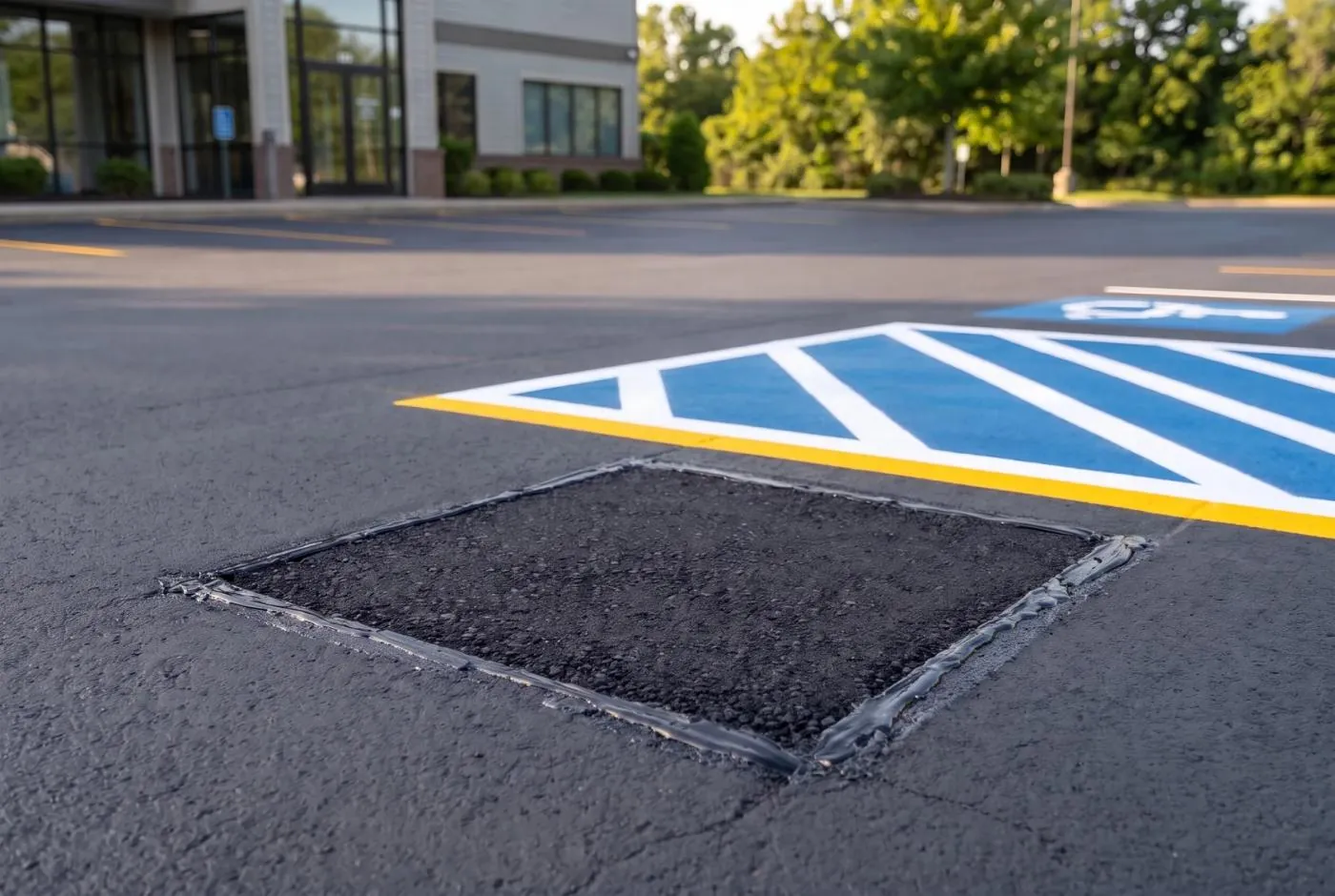
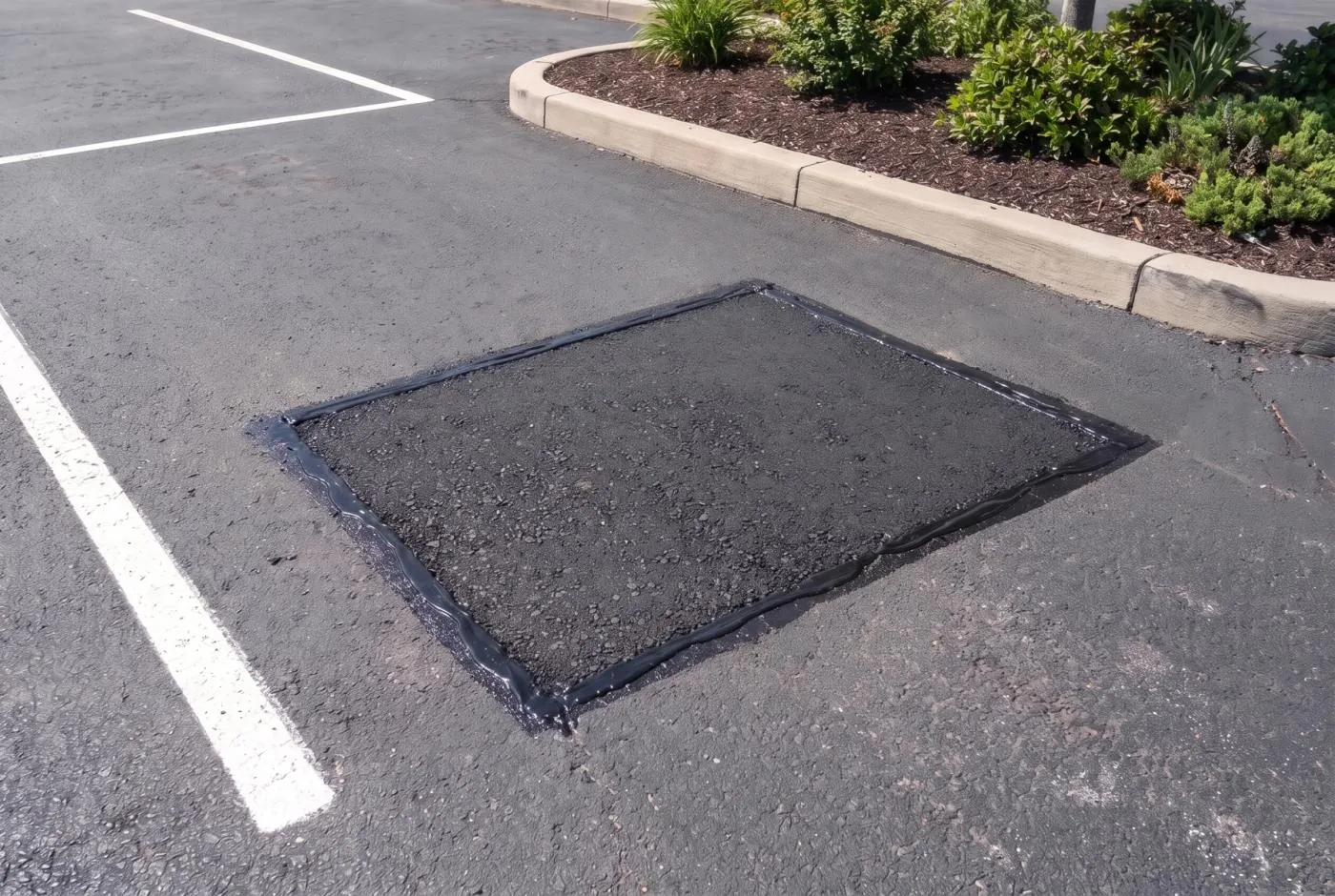
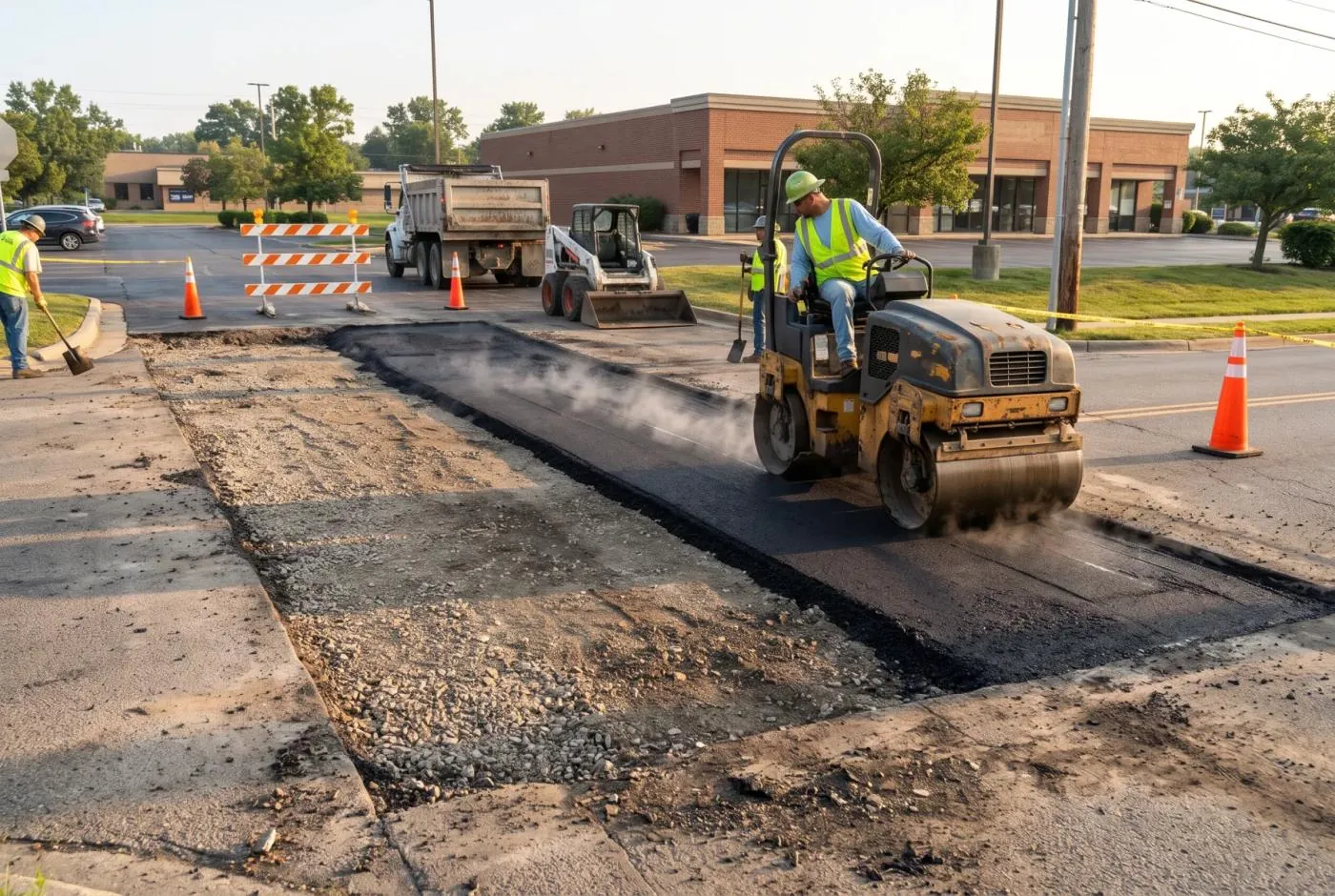
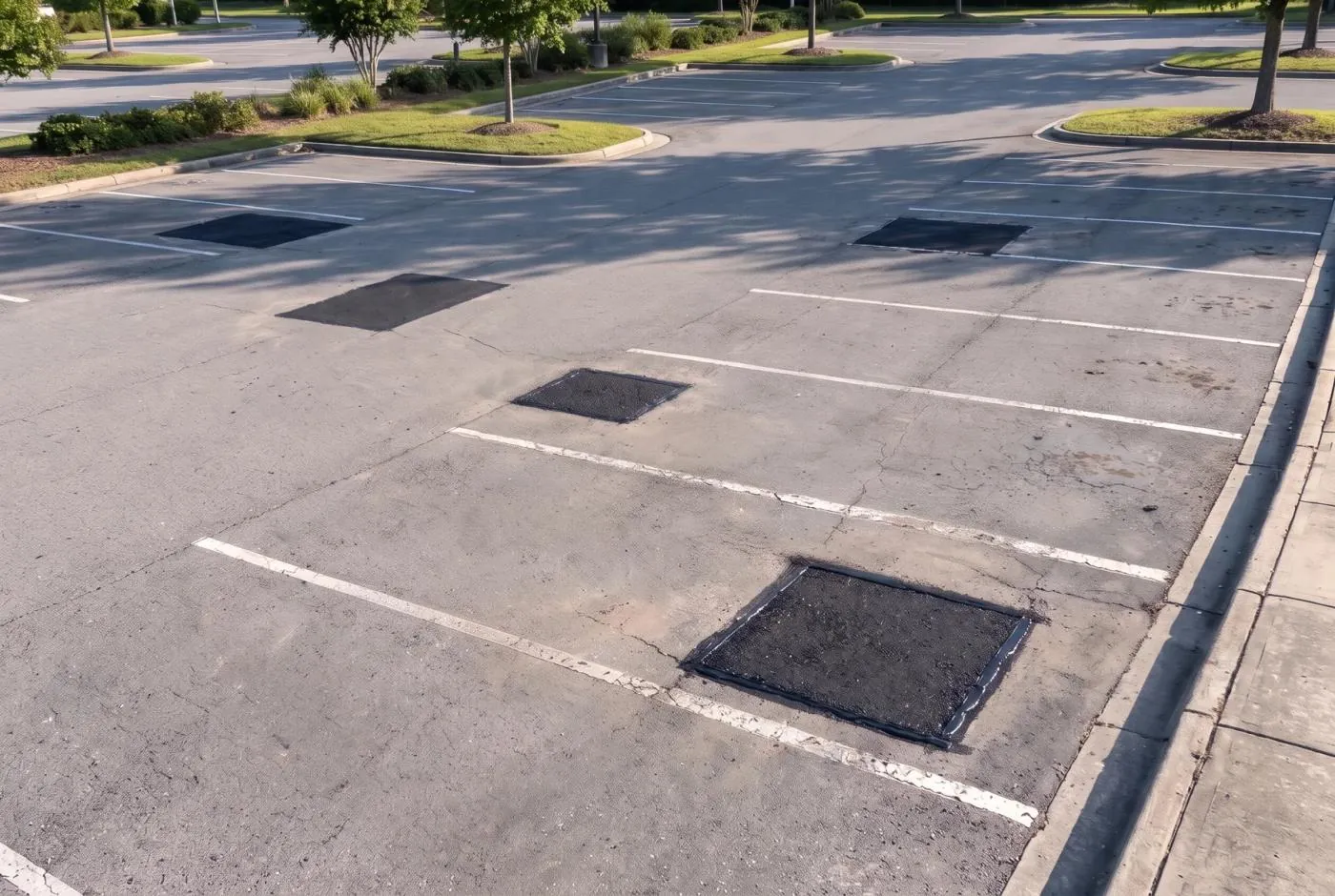
Asphalt repair covers a range of work. Pothole patching fills individual holes. Cut-and-patch (also called saw-cut repair or remove-and-replace) cuts out a failed section in a clean rectangle and rebuilds it with new hot asphalt. Skin patching levels shallow, worn areas. Edge and apron repairs rebuild broken pavement at entrances, curbs and dumpster pads. We recommend the smallest repair that will actually last, and we tell you plainly when an area is past patching.
Good pavement repairs come down to preparation: cutting back to solid asphalt, cleaning the hole, fixing the base where it has failed, and compacting the new asphalt properly so the patch sits flush and stays put.
Signs your pavement needs repair
Potholes of any size. Alligator cracking, where the surface breaks into a pattern like scales, which means the base underneath is failing. Sunken areas that hold water after rain. Crumbling edges. Raised or broken spots near walkways and entrances that could trip someone. Cracks that keep getting wider even after they have been filled.
Why parking lot repairs should not wait
Water is what destroys asphalt. Once it gets through the surface it softens the base, and every vehicle that drives over the weak spot makes it bigger. Gulf Coast downpours speed that up. A small repair done early is far less disruptive than a large section replaced later, and it removes a hazard for the people walking and driving on your lot.
Repairs before sealcoating and striping
Sealcoating and striping only look good and last on sound pavement, so asphalt repairs and crack sealing come first. We can price the repairs alone or as phase one of a repair, seal and stripe plan, and schedule the phases to fit your budget.
Who we do pavement repairs for
Property managers, retail centers, restaurants, office and medical buildings, HOA and apartment communities, churches, schools and industrial sites. We handle short pothole lists as well as larger parking lot repair projects, and we work around business hours.
What causes asphalt to fail
Asphalt fails for a few reasons. Water gets through cracks and weakens the base. Heavy vehicles such as delivery and trash trucks load the same spots over and over, especially at entrances and dumpster pads. Poor drainage leaves water standing on the surface. Sun dries the asphalt out until it turns brittle. Age does the rest. Knowing the cause tells us what repair will last: a surface patch over a wet, soft base will fail again, so the base is fixed first.
Surface patch versus full-depth repair
Not every damaged area needs the same repair. Where the surface is worn or shallowly broken but the base is firm, a surface patch levels and restores it. Where the pavement is cracked through, sunken or soft underfoot, the failed section is removed full depth, the base is rebuilt and compacted, and new asphalt is placed in layers. We explain which repair each marked area needs and why, so you are not paying for more than the problem requires.
Drainage and low spots
Standing water is one of the fastest ways to lose a parking lot. Low spots that hold water after rain keep the pavement saturated and break it down from the top and bottom. Repairs in those areas are built to shed water toward drains or the lot edge. Asphalt around catch basins and drains is a common failure point and is repaired so water flows in, not around.
Heavy-traffic areas: entrances, drive lanes and dumpster pads
Entrances, exits, drive-thru lanes, loading areas and dumpster pads take the heaviest loads on any property and usually fail first. These areas often need a deeper, stronger repair than ordinary stalls. Fixing them properly prevents the same section from breaking up again under the next truck.
Planning repairs around a budget
A lot with several problem areas does not have to be fixed all at once. We mark every area, rank them by safety and by how quickly they will get worse, and give you a phased plan. Hazards near walkways and entrances come first. Many owners do urgent repairs now and schedule the rest with sealcoating and striping so the property is closed only once.
How we work
- Mark out. We walk the lot and mark every area that needs attention.
- Estimate & phase. Clear pricing, with repairs prioritized by safety and budget.
- Repair. Cut, remove, rebuild and compact.
- Protect. Seal and stripe on top when you're ready.
Why it matters on the Texas Gulf Coast
Every rainy season, water turns small cracks into potholes. Repairing failed areas early and sealing cracks before the summer storms costs far less than replacing large sections later.
Where we provide asphalt repair
Asphalt Repair in Clear Lake · Asphalt Repair in Pearland · Asphalt Repair in League City · Asphalt Repair in Friendswood · Asphalt Repair in Alvin · Asphalt Repair in Manvel · Asphalt Repair in Rosharon · Asphalt Repair in South Belt · Asphalt Repair in Liverpool
Asphalt Repair FAQs
Do you fix single potholes too?
Yes. Individual holes are covered on our pothole repair page; this page covers larger failed areas.
Do repairs have to be done before sealcoating?
Ideally, yes. Sealer protects sound pavement; failed areas should be repaired first so the whole surface lasts.
How long until a patch can be driven on?
Usually the same day once the asphalt is compacted and cooled. We'll confirm for your job.
Do you do full repaving?
We focus on maintenance and repairs. For full replacement projects, ask us — we can coordinate the right solution through the Appell network.
What is the difference between asphalt repair and pavement repair?
Most people use them to mean the same thing: fixing damaged areas of an asphalt parking lot, such as potholes, cracking and broken edges.
Can potholes be fixed in winter?
Often they can be made safe in cold weather, with a permanent hot-asphalt repair once temperatures allow. We will tell you what is possible when you call.
What causes alligator cracking?
Usually a weak or wet base under the asphalt. Filling the cracks will not fix it; the failed area needs to be cut out and rebuilt.
Will the patch match the rest of the lot?
New asphalt is darker than old pavement. Sealcoating afterwards blends the repairs into a uniform surface.
How long does an asphalt repair take?
Most repair lists are completed in a day or two, depending on the number and size of the areas. We confirm timing with your estimate.
When can the repaired area be driven on?
Usually the same day, once the new asphalt has been compacted and has cooled.
Do repairs need to be sealed afterwards?
New asphalt needs time to cure. After that, sealcoating protects the repairs and blends them with the rest of the lot.
Can you repair asphalt around drains and catch basins?
Yes. We rebuild failed asphalt around drains so water flows into them properly.
Ready for a sharper-looking lot?
Free, no-obligation estimates across South Houston. Night and weekend scheduling available.