
Pothole Repair in South Houston
A pothole is the fastest way for a parking lot to hurt a tire, a rim or an ankle. We patch them properly, usually in a single visit.
Get a Pothole Repair Estimate
Tell us about your lot. We'll follow up within one business day.
A pothole starts when water gets under the surface and traffic breaks out the weakened asphalt. Once it opens, every car that hits it makes it wider and deeper, and the loose stone spreads across the lot.
Pothole repair is the quick, targeted fix: we deal with the individual holes now, so your lot is safe to drive and walk on, and we tell you honestly if a spot needs more than a patch.
What's included
Pothole patching versus asphalt repair
Pothole repair fixes individual holes. When the pavement around a hole is cracked in a web pattern, has sunk, or keeps failing in the same place, the problem is the base underneath, and a patch on top will not last. That is larger cut-and-replace work, which we cover on our asphalt repair page. We tell you which one each spot needs before any work starts.
Signs a pothole needs attention now
Holes in drive lanes, at entrances and exits, in front of doors or in accessible parking spaces. Holes deep enough to hold water or catch a tire. Loose chunks of asphalt around the edge. Customers or tenants mentioning it. Any of these is worth fixing right away, not waiting for the next larger project.
Why potholes should not wait
A pothole lets water straight into the base, so the damage spreads outward under the surface before you can see it. It is also the kind of defect people trip on and cars get damaged by. A patch done early is a small job; left alone, the same spot becomes a section that has to be cut out and rebuilt.
How long a pothole patch lasts
A patch cut back to solid asphalt, filled with hot mix and compacted properly should last as long as the pavement around it. Cold patch pressed into an uncut hole is a temporary measure; we use it only to make a spot safe until a permanent repair can be done.
Pothole repair for commercial properties
We patch potholes for retail centers, restaurants and drive-thrus, office and medical buildings, apartment and HOA communities, churches, schools and industrial sites, and we schedule around your busy hours.
How potholes form
Every pothole starts with water. Water enters through a crack or a worn spot and sits in the base under the asphalt. Traffic flexes the weakened surface until a piece breaks loose, and each tire that follows knocks out a little more. On the Texas Gulf Coast, strong sun and heavy rain are hard on pavement and paint alike. That is why potholes seem to appear overnight after wet weather, and why they grow fastest in drive lanes and at entrances where traffic is heaviest.
Hot asphalt versus cold patch
There are two ways to fill a pothole. Hot-mix asphalt is the permanent repair: it is placed hot, compacted, and bonds to the surrounding pavement as it cools. Cold patch is a bagged material that can be placed in any weather, which makes it useful for making a hole safe quickly, but it does not last as long. We use hot asphalt for permanent repairs and cold patch only as a temporary measure when weather or timing demands it.
Why cutting the hole square matters
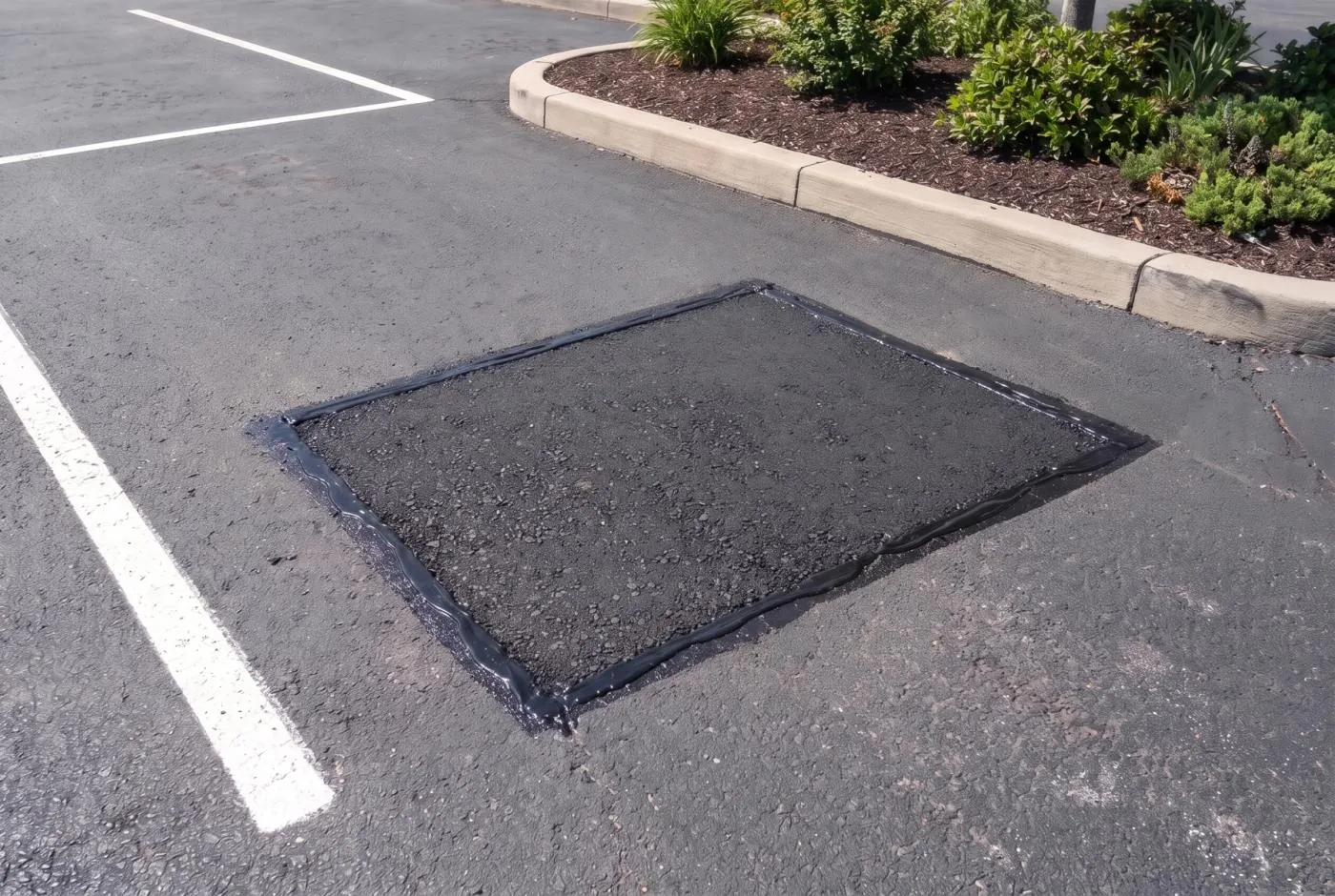
A pothole has loose, crumbling edges. If new asphalt is simply pressed into the hole, it bonds to that weak material and breaks out again. Cutting the hole back to solid pavement with straight, vertical edges gives the patch something sound to hold on to and lets it be compacted properly. It takes a little longer, and it is the difference between a patch that lasts and one that comes back.
Potholes, safety and liability
Potholes damage tires, wheels and suspensions, and they are a trip hazard for anyone walking across the lot, especially at night or when a hole is full of water. For a property owner or manager, a known pothole that is left unrepaired is an avoidable risk. Repairing holes promptly, and keeping a record that you did, is the simplest way to protect the people who use your property.
Emergency and priority pothole repair
When a pothole is in a main drive lane, an entrance, a fire lane or an accessible parking space, tell us and we will prioritize it. Where a permanent repair cannot be done right away, we can make the area safe first and return to complete the work.
Preventing the next pothole
Potholes are the end of a process that starts with open cracks. Sealing cracks while they are small keeps water out of the base. Sealcoating on a regular cycle slows the drying that makes asphalt brittle. Fixing drainage so water does not stand on the lot removes the cause. A short walk-through once or twice a year catches problems while they are still inexpensive to fix.
What to expect on repair day
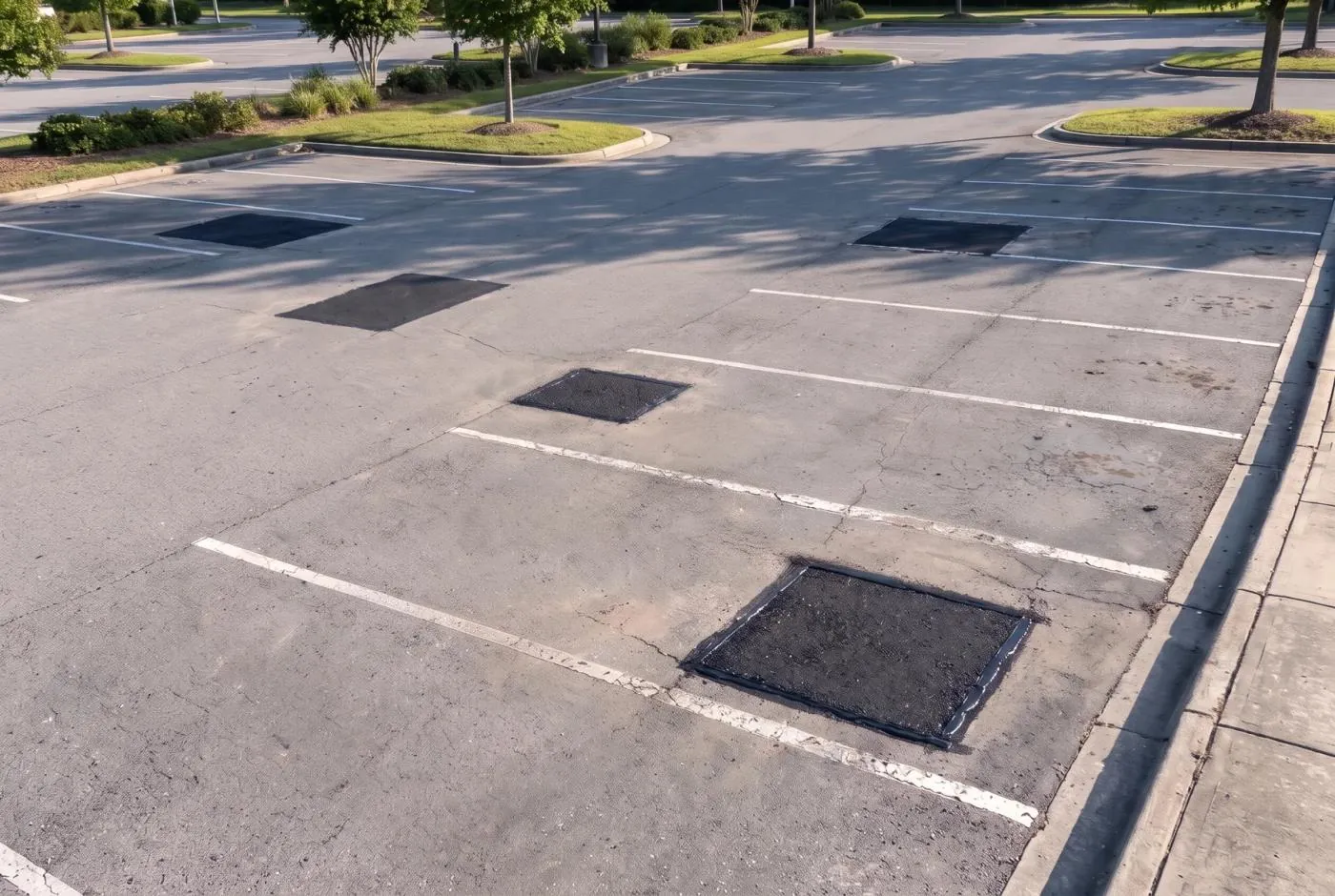
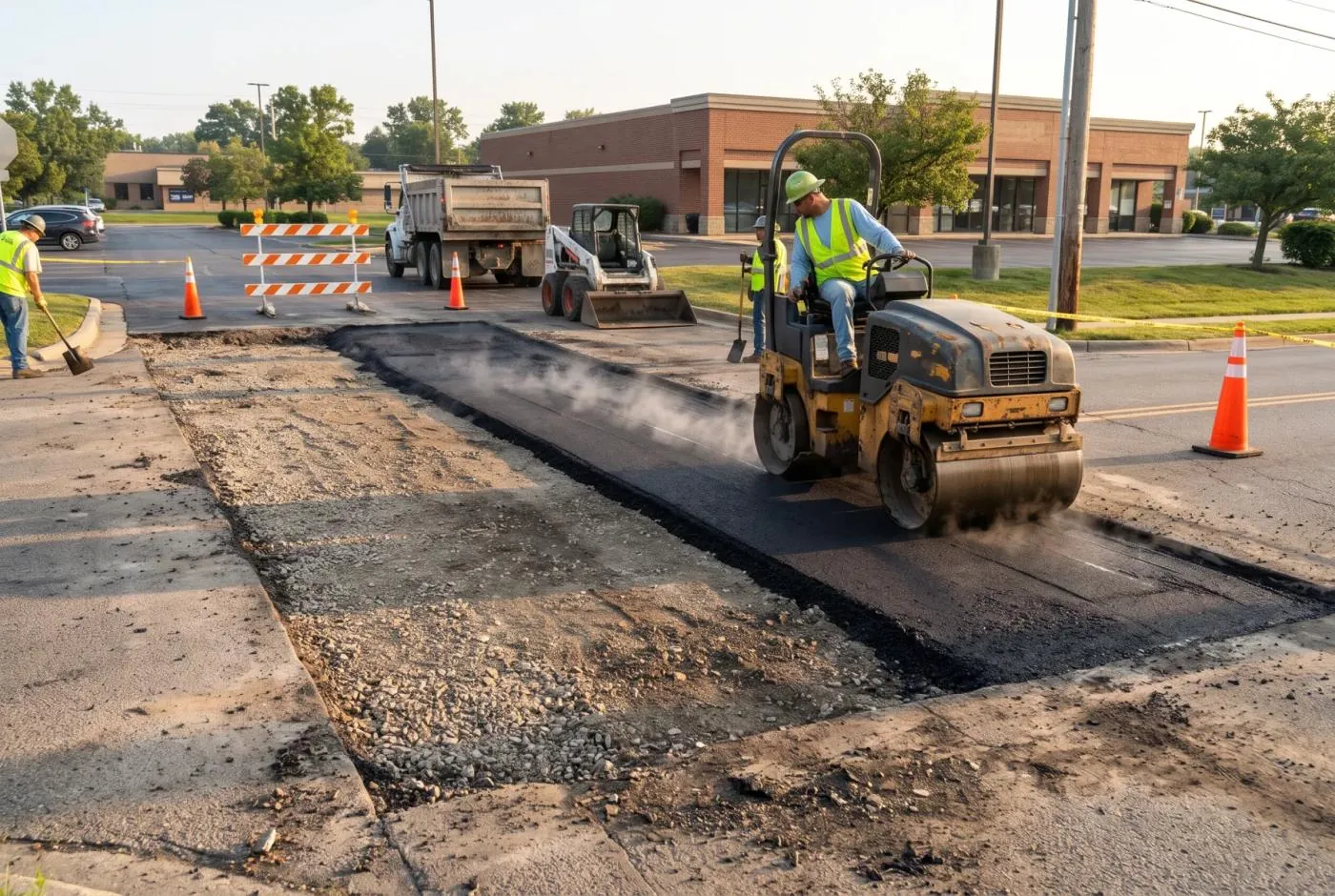
We set cones around each work area so traffic can keep moving through the rest of the lot. Each hole is cut square, cleaned out and dried, filled with hot asphalt and compacted in layers until it is flush with the pavement around it. Loose stone is swept up before we leave. Most patches can take traffic the same day, and we tell you when each area is ready to reopen.
Potholes at entrances, drive-thrus and loading areas
Holes in these spots matter most, because every vehicle crosses them and heavy trucks hit them hardest. They often need a deeper repair than a hole in a parking stall. We check the base under each one and build the patch to carry the traffic it will see.
Pothole repair programs for multiple properties
Property managers with several sites can send us one list. We inspect each property, mark and photograph every hole, and provide one estimate and one schedule, with before-and-after photos for your records.
How we work
- Find and mark. We walk the lot, mark every pothole and check whether the base under it is sound.
- Estimate. A clear written estimate for the list, with anything larger flagged separately.
- Patch. Cut square, clean out, fill with hot asphalt and compact.
- Reopen. Most patches can take traffic the same day.
Why it matters on the Texas Gulf Coast
Heavy Gulf Coast rain finds every opening in the pavement, so a small pothole in the Houston area grows quickly. Patching holes as they appear, before storm season where possible, keeps a small job from becoming a large one.
Where we provide pothole repair
Pothole Repair in Clear Lake · Pothole Repair in Pearland · Pothole Repair in League City · Pothole Repair in Friendswood · Pothole Repair in Alvin · Pothole Repair in Manvel · Pothole Repair in Rosharon · Pothole Repair in South Belt · Pothole Repair in Liverpool
Pothole Repair FAQs
How quickly can you fix a pothole?
Most pothole lists are handled in a single visit once the estimate is approved. Tell us if a hole is a safety problem and we will prioritize it.
Can you fix just one pothole?
Yes. We repair single holes as well as full lists.
How long before cars can drive on the patch?
Usually the same day, once the asphalt has been compacted and has cooled.
Will the patch match the rest of the lot?
New asphalt is darker than older pavement. Sealcoating afterwards blends patches into a uniform surface.
Can potholes be repaired in the rain or cold?
We can make a hole safe with a temporary patch in poor weather and return for the permanent hot-asphalt repair.
Why does the same pothole keep coming back?
Usually because the base underneath has failed or the hole was filled without being cut back. That spot needs an asphalt repair, not another patch.
Do you repair potholes in concrete?
Our pothole repair is for asphalt pavement. Ask us about concrete and we will tell you what we can do.
Should potholes be fixed before sealcoating and striping?
Yes. Repairs come first, then crack sealing, sealcoating and striping on top.
How deep does a pothole have to be to need repair?
Any hole that can catch a tire or a foot, or that holds water, is worth repairing. Shallow holes become deep ones quickly.
Do you repair potholes in gravel or concrete?
Our pothole repair is for asphalt pavement. Ask us about other surfaces and we will tell you what we can do.
Can you patch potholes the same week?
Often, yes. Tell us if a hole is a safety concern and we will schedule it as a priority.
Do you provide photos of completed repairs?
Yes. We photograph the work so you have a record for owners, tenants or your own files.
Ready for a sharper-looking lot?
Free, no-obligation estimates across South Houston. Night and weekend scheduling available.